
The Forest and the Trees
A still-uncertified election is a constitutional crisis in slow motion

Hello voters. What a quiet week to end this years-long month! As I continue to ponder how to make this newsletter both useful and not a contributor to your anxiety, I’m planning to check in with the many very inspiring people I interviewed for Thank You for Voting to hear their to-do lists for Trump 2.0.
One woman in the book, however, I don’t need to text to know what she’s up to. She’s been dragged into the most high-profile, downright scandalous post-election dispute, and it has nothing to do with Trump. (While also everything.)
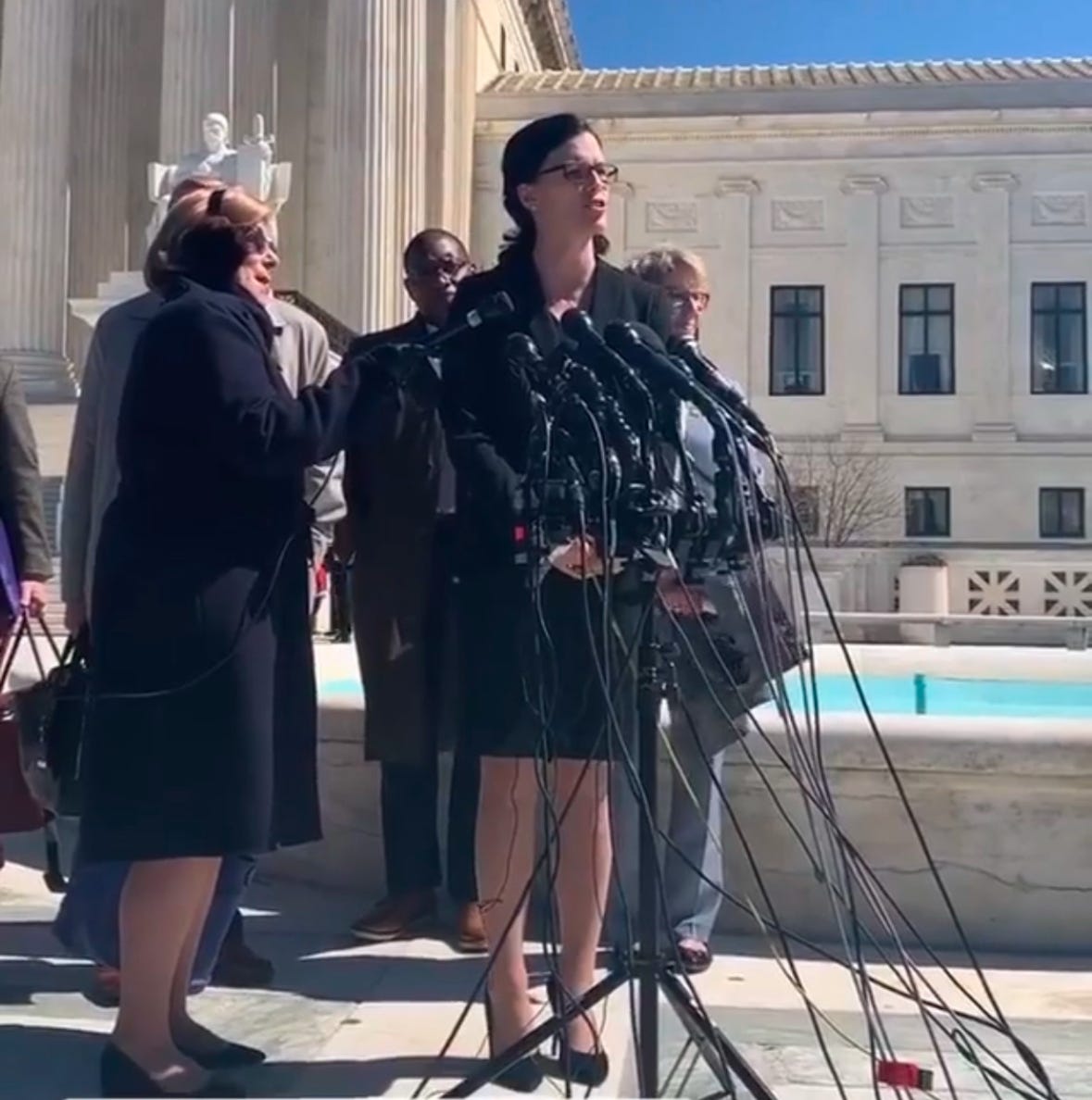
In 2019, Allison Riggs was an attorney with the Southern Coalition for Social Justice, where she did a ton of voting rights work and argued on behalf of the League of Women Voters in the landmark Supreme Court case Rucho. I was at the Court that day, and though she did a masterful job arguing that North Carolina’s congressional maps were unfair and the result of explicit partisan gerrymandering, the then newly-conservative Court said in a 5-4 decision that courts were powerless to do anything about pesky political problems like rigging electoral maps.
Fast forward to 2023, and Riggs was appointed to the North Carolina Supreme Court. To keep a long story short and spare you the legal back and forth: Riggs was up for election in November, and beat her opponent by about 700 votes. There was the count, a recount, and multiple other checks, and all the numbers were confirmed. She won. But sometimes losers are sore, and the one in her race — himself on a sitting judge on a North Carolina lower court — is fighting certification of the election.
Did he claim the votes were miscounted? No. Did he claim there was rampant voter fraud and every Democrat in Raleigh voted twice? Also no. Instead, he argues that about 66,000 registered voters — many of whom registered years ago and have been lawfully voting for years — should never have been registered. (Riggs’s own parents are in the group he’s contesting.) Some he claims were missing info like a driver’s license number, others involve challenges about overseas and military absentee voting rules. If you’re thinking claims like that need to be brought before an election, you’d be correct. And if you’re also thinking, “Didn’t those same 66,000 people vote in all the other statewide elections and haven’t all those elections been certified?” Yep.
And yet, justices on the very court on which Riggs sits are allowing this case to move forward. A few indicated they find the loser’s arguments plausible. This from the chief justice of the North Carolina Supreme Court: “On the night of the election, petitioner led his opponent by almost 10,000 votes. Over the course of the next several days, his lead slowly dwindled, and he now trails his opponent by 734 votes out of the 5,540,090 total votes cast. That is a highly unusual course of events. It is understandable that petitioner and many North Carolina voters are questioning how this could happen.” If you’re now like: But that’s not even what the loser is suing over?! Again, correct. A state supreme court casually tossed in conspiracy-theory rhetoric that has ZERO to do with the case.
The case is now with a North Carolina lower court, and a federal appeals court is also figuring out whether to weigh in. But the bottom line is this situation has gone way further than it should, and it’s not out of the realm of possibility the North Carolina Supreme Court could allow an election to be stolen from their own colleague.
Most of the claims of voter fraud and nitpicking of election laws disappeared when Republicans had a successful 2024 and didn’t need their smokescreen anymore. But this election loser and his brand of chaos could trigger a constitutional crisis.
Quite obviously I didn’t bring the sunshine today. But what’s happening in North Carolina deserves attention, even amongst the constant churn from Team Trump.
When I’m not editing stories that give me literal chest pains, I’ve been trying to finish Edith Wharton’s 1920 novel Age of Innocence. Its glacial pace is calming, though I was disappointed to learn Wharton, who wrote about the limitations placed on women at the exact time U.S. women were fighting for the vote, was anti-women’s suffrage.
Here are three items to read this week:
Ann Lamott, in the Washington Post: The Resistance Will Not Be Rushed
Candace Norwood, in the 19th: “We saw this coming.” State Attorney Generals are Ready for Trump 2.0
Chris Geidner, in Law Dork: Trump Continues Attack on Trans People
Thank you, Erin, for all you research, write, and share.